
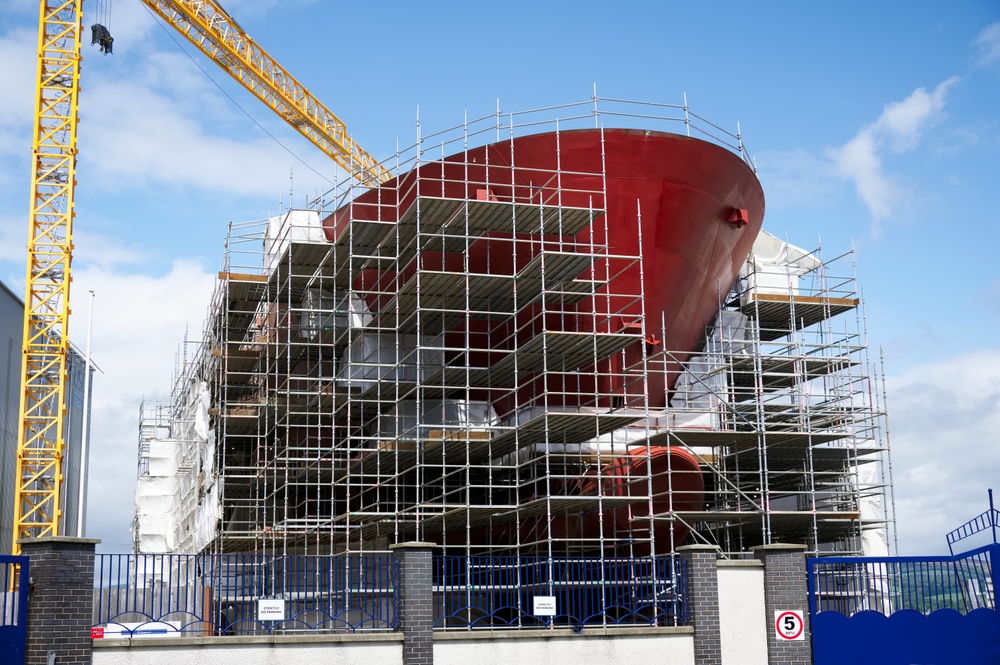
With maritime transport generating roughly 3% of global greenhouse gas emissions, the pressure on European shipyards to accelerate green innovation continues to grow. Moving around 80% of global trade, continuation of operations is vital, so it’s the shipbuilders that sit at the heart of decarbonisation investment, implementing low and zero-emission technologies for the future.
Although the transition toward net-zero shipping is gaining momentum, shipyards still face significant challenges, from securing investment and alternative fuels to scaling supporting infrastructure and developing workforce expertise to keep pace with evolving regulations.
For many shipyards, the biggest barrier is no longer just the technology itself, it’s finding experts who combine traditional maritime know-how with the emerging green skills needed for next-generation vessels. An ageing fleet and slow renewal cycles further increase the urgency for shipyards to build teams that can deliver future-proof, energy-efficient designs.
The Growing Green-Skills Shortage
It’s estimated that up to 250,000 seafarers and maritime workers in Europe will need reskilling or upskilling by the mid-2030s to keep pace with the green and digital transition. At the same time, many shipyards report difficulty finding qualified workers for advanced tasks, from hybrid propulsion design to digital-twin modelling, as competition intensifies with other industries for a shrinking pool of experts.
According to a 2025 industry review, about 40% of the workforce is over 50 years old, signalling a looming wave of retirements just as demand for green-skilled staff is surging.
Meanwhile, the blue skills survey indicates a strong rise in demand for “green skills”, including clean-fuel technologies, sustainable ship design, and digital tools for energy efficiency and lifecycle management.
With experts scarce, traditional hiring strategies are not going to be sufficient for requirements. Shipbuilding specialists need more flexible solutions to ensure the right experts are available for their projects.
Bringing in specialist consultants delivers the expertise that can’t be found elsewhere in the hiring market. With a team of consultants, you have access to skills that may not exist in-house, flexibility to scale teams up or down, accelerated project delivery, and fresh, objective perspectives. They also help manage risks, ensure compliance with evolving standards, and can transfer knowledge to internal teams, building long-term capacity without the commitment of permanent hiring.
The Green Skills Shipyards Are Missing Most
Alternative-Fuel Systems Engineering
Although a growing share of newbuilds are designed for low or zero-emission fuels, adoption across the operating fleet remains slow. More than half of today’s orderbook is alternative-fuel capable, yet only about 7% of existing vessels can actually use these fuels, meaning overall maritime emissions continue to rise. Technologies that lower alternative fuel demand, such as hybrid, battery, or nuclear systems, are emerging but still represent less than 1% of the fleet.
LNG continues to dominate, though methanol-ready designs are increasing as more shipyards enter this segment. Conversions, especially in Europe and China, are also becoming more common for fuels like LNG, biofuels, LPG, and hydrogen. European engine makers supply most of the alternative-fuel-ready engines in both the active fleet and the orderbook.
As companies navigate these rapid changes, many face a shortage of green technical expertise in fuel systems engineering. An experienced consultant can help close this skills gap by advising on fuel strategies, supporting technology adoption, and building internal capabilities for a successful energy transition.
Energy Efficiency Design
The rising age of the global fleet could be a problem for the sustainability goals of many shipyards. With ships operating for roughly 25 years, those built now will still be sailing in 2050, making the design phase the most important moment to lock in strong energy performance.
For EU shipyards, this creates urgent demand for new technical skills. Improving energy efficiency now requires expertise in hydrodynamics, lightweight structural design, advanced propulsion and power-system integration, digital modelling of energy use, and understanding how onboard systems interact over a vessel’s lifetime. Because different ship types need different decarbonisation pathways, yards must develop a broad skill set rather than rely on a single solution.
As shipowners increasingly seek energy-efficient, fuel-flexible vessels, Europe’s growing shortage of these specialised skills is becoming a strategic challenge. Strengthening design-level efficiency capabilities is essential if EU shipbuilders are to remain competitive and meet future regulatory expectations.
Digitalisation & Industry 4.0 Skills
Energy-Saving Technologies (ESTs)
Because alternative fuels remain scarce and costly, shipyards must increasingly rely on energy-saving solutions to reduce emissions. Technologies such as propeller and hull optimisation, rotor sails, fixed wings, wind-assist systems, solar installations, and onboard carbon-capture equipment can significantly lower fuel demand and help shipowners comply with tightening IMO regulations. These measures also make the eventual transition to low-carbon fuels more affordable, as a more efficient vessel requires far less alternative fuel to operate.
Delivering these solutions at scale requires a new generation of green skills across European shipyards. Naval architects need deeper expertise in hydrodynamic optimisation, aerodynamic design for wind-assist systems, and integrating new energy-saving devices into existing ship layouts. Engineers must understand how to combine multiple technologies, such as batteries, smart power-management systems, and hybrid propulsion, to maximise efficiency gains. Materials experts and production teams also need familiarity with lightweight structures and coatings that reduce drag and improve performance.
Industry 4.0
Digital competencies are becoming equally critical. Skills in big-data analytics, AI-driven performance optimisation, and digital-twin modelling allow shipyards to predict energy use, evaluate design choices, and monitor efficiency over a vessel’s lifetime. CAD/CAM, robotics, and 3D printing are transforming production workflows, enabling more precise designs, less material waste, and faster construction. At the same time, as digital systems expand, strong cybersecurity expertise is essential to protect shipyards and vessels from potential threats.
Data Engineering
Data engineering is foundational for enabling data-driven emission reductions in shipbuilding and ship operations. By collecting, integrating and processing large amounts of data from sensors (hull resistance, engine performance, weather and sea‑state, fuel consumption, route history etc.), data engineers make it possible to build accurate digital replicas of vessels, so-called Digital Twins. These digital twins allow shipyards and shipowners to simulate design choices (hull shape, propulsion systems, wind‑assists, hybrid energy systems) and forecast their impact on energy consumption and greenhouse‑gas emissions long before a ship is built.
Moreover, in the operational phase, data engineering supports continuous monitoring and optimisation of fuel use, voyage performance, and compliance with environmental standards. Big‑data analytics, enabled by structured, high‑quality data, can optimise routes, engine load, maintenance schedules and power‑management systems to minimise fuel consumption and emissions. According to industry analysis, such data-driven approaches can reduce fuel or emissions per voyage by up to 10% or more, depending on conditions.
The only problem with data engineering skills is that there are few experts who both have a strong data engineering track record and a background in maritime decarbonisation. Bringing in expertise for critical project phases could offer a solution to this problem.
Soft Skills
In green shipbuilding, soft skills are just as crucial as technical expertise. Collaboration and communication are essential, as engineers, naval architects, materials experts, and digital experts must work together to integrate complex energy-saving technologies and digital systems. Problem-solving and critical thinking allow teams to innovate and adapt designs quickly, ensuring vessels meet both efficiency targets and environmental regulations. Project management skills are also important to coordinate multiple stakeholders, timelines, and budgets while keeping sustainability goals on track.
Equally important are adaptability and continuous learning. The green shipbuilding sector is evolving rapidly with new regulations, alternative fuels, and digital tools. Workers who can quickly learn and apply new technologies, embrace innovation, and remain flexible in the face of changing requirements will be in high demand. Additionally, fostering a culture of environmental awareness and responsibility helps ensure that every decision, from materials selection to production processes, aligns with the broader goal of reducing emissions and promoting sustainable maritime practices.
Why Does the Shipbuilding Industry Need to Invest in Green Expertise?
Nearly 90% of a vessel’s environmental impact occurs during its operational life, mainly from engine and generator exhaust. Achieving net-zero shipping is therefore a long-term challenge that requires not only technological innovation but also skilled professionals who can design, implement, and manage low-emission solutions across the ship’s lifecycle. Companies that invest in experts with green skills, such as energy-efficient design, hybrid propulsion integration, and lifecycle emission analysis, are better positioned to create vessels that meet strict environmental standards and remain competitive as regulations tighten.
As the shipping industry moves toward renewable and low-carbon energy sources, operational emissions are expected to decline, shifting the focus to the environmental impact of shipbuilding and end-of-life processes. This makes it increasingly important for shipyards to have personnel capable of optimising materials, construction processes, and recycling strategies to minimise overall emissions. Investing in green experts ensures that shipbuilding projects not only comply with evolving sustainability requirements but also reduce costs over the ship’s lifetime, improve efficiency, and strengthen the company’s reputation as a leader in environmentally responsible shipping.
How CMC’s Experts Solve Green Skills Shortages In Shipbuilding
CMC offers a unique business model based on building sustainable partnerships with leading STEM companies worldwide. Our project solutions are seamlessly integrated into your projects and are supported by ongoing, flexible services such as soft skills training, employee engagement reviews, and mobilization support. This ensures that our service is fully tailored to your project needs.
Thanks to our flexible international consultancy services across advanced engineering and energy projects, we operate with full-service level agreements, clear jointly agreed KPIs, and, where possible, pre-agreed fee structures or hiring budgets. Here are our services:
· Expert on Demand
· Team on Demand
· Capacity Partnering
· Owners Extension
· Ongoing project support
Do you need niche experts with a proven track record in shipbuilding projects? Contact our team today to find the right expertise for your decarbonisation goals.